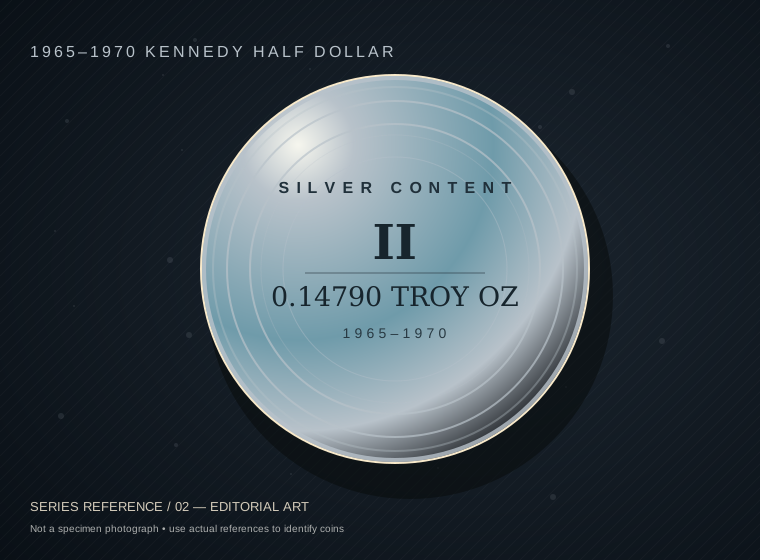
Conceptual editorial art—not an actual specimen or authentication reference.
Silver-clad transition yearsHow much silver is in a 1965–1970 Kennedy Half Dollar?
From 1965 through 1970, regular Kennedy half dollars had a layered silver-clad composition averaging 40% silver by weight, equating to about 0.1479 fine troy ounces per coin.
How to calculate its melt value
Multiply the coin’s nominal fine silver weight (0.14790 troy oz) by the silver spot price you choose. For 10 identical coins, multiply by 10 after calculating one coin. Coin wear and manufacturing tolerances can change the physical metal in an individual specimen.
History and identification
The U.S. Mint reduced the half dollar’s silver content after 1964. The outer layers and core have different alloys; the 40% figure describes the overall composition, not either layer on its own.
Before you sell: look for collector value
Varieties, proofs and unusually well-preserved specimens may bring more than bullion value.
Do not apply the 40% silver factor to regular circulating 1971-and-later Kennedy halves. Some special collector strikes have different compositions.
How to investigate a specific example
Record the year, mint mark, denomination, measured weight and condition without polishing the surfaces. Compare those features with reference photographs from a respected grading service. If you suspect a scarce date or error, obtain qualified advice before selling the coin as bulk metal.
Reference sources
Nominal fine silver values for common historic U.S. issues are cross-checked against NGC’s melt value table and our sources and methods. Consult series-specific grading references for varieties and numismatic prices.