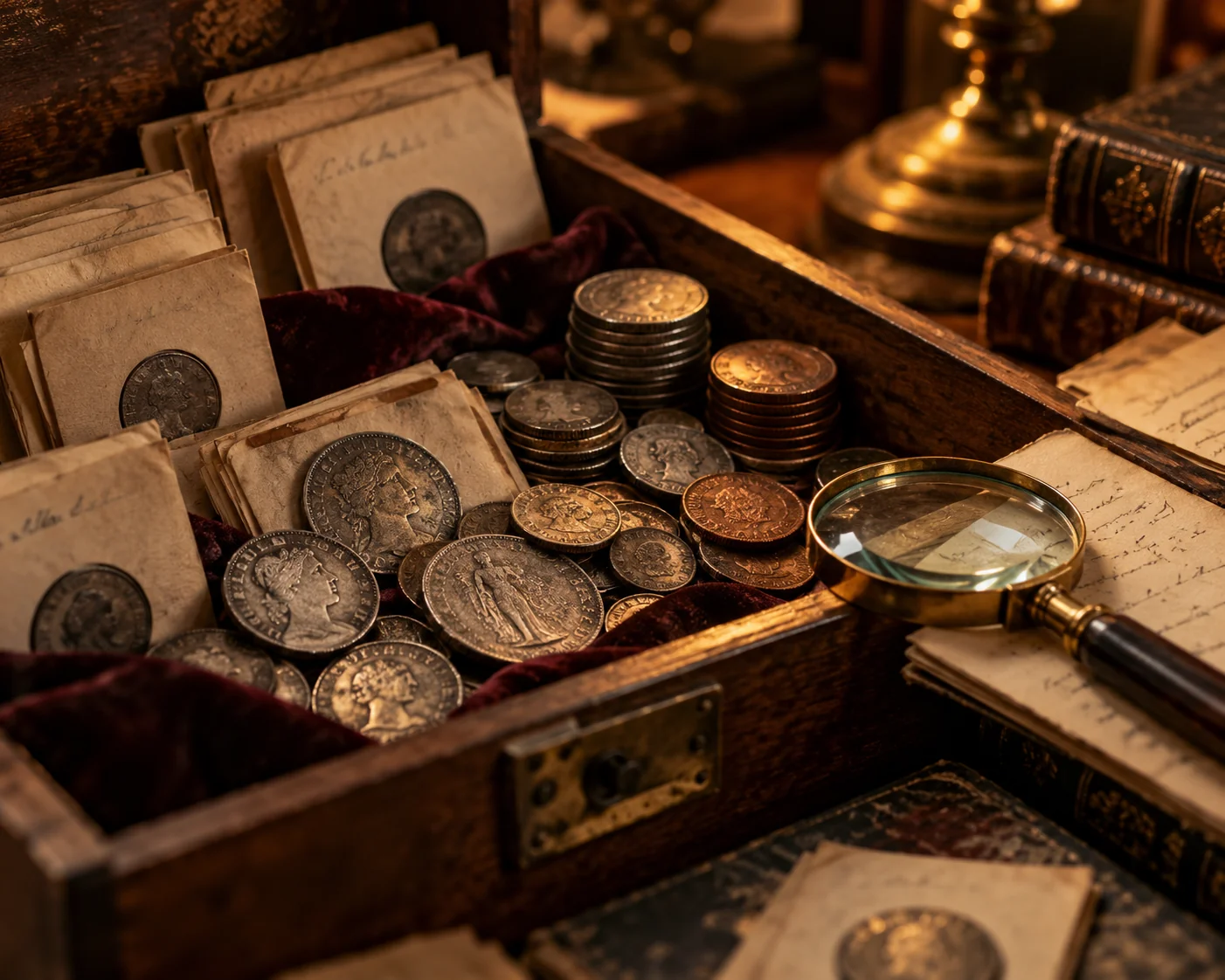
An inherited coin collection can contain ordinary silver, collectible pieces, and coins with little precious-metal content. Resist the temptation to dump everything into one melt-value calculation.
Step 1: preserve the collection
Keep envelopes, albums, labels, old invoices and associated paperwork. Do not clean coins. Photograph the original grouping before sorting, since notes or packaging can help with provenance.
Step 2: sort by denomination and date
Group common dimes, quarters, half dollars, dollars, nickels and possible gold. Make separate piles for pre-1965 silver, 1965–1970 Kennedy halves, war nickels, and later collector strikes. Set aside coins with unusual dates, mint marks or designs.
Step 3: estimate standard metal value
Use individual coin quantities when the collection has mixed types. For face-value bags of common circulated 90% dimes/quarters/halves, the 0.715 fine troy ounces per $1 face convention can provide a rough trading reference. Record which silver spot price you used.
Step 4: identify possible collector premiums
Consult a current numismatic reference for unusual dates, varieties and condition. Remember that the asking price of an online listing is only a seller’s request, not proof of what the coin sells for.
Step 5: compare offers safely
For meaningful lots, seek more than one established dealer’s written quote and ask about fees, authentication and payment terms. Never mail coins without reviewing insurance and shipping arrangements. Valuable rarities may warrant a specialized numismatic dealer or auction house.
Step 6: keep a simple record
Export a valuation CSV from our collection calculator and attach your own photos and notes privately. Treat the sheet as a metal-content worksheet, not a certified appraisal.
Put the formula to work
Open our multi-coin calculator to enter coin quantities and your own silver or gold spot quotation. For mixed lots, save a private collection and print a metal-content worksheet.
See the source and calculation methodology for published nominal fine-metal weights and additional research references.